
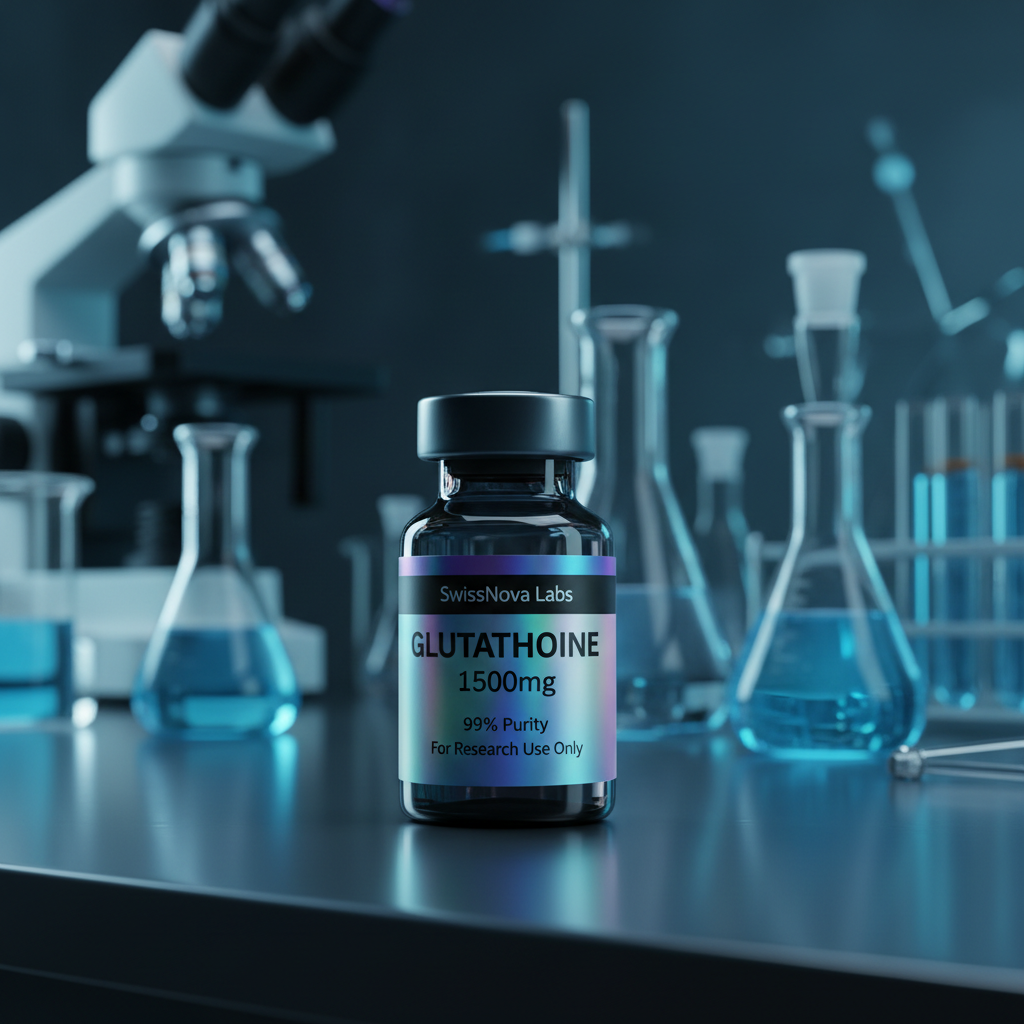
Tesamorelin
Stabilized GHRH analog with extended activity and strong GH pulse.
2 mg/day (standard daily dose)
Key Benefits
FDA-approved to reduce visceral adipose tissue by 15–18% over 26 weeks, with selective action on deep abdominal fat
produces 2–3× greater IGF-1 increase than Sermorelin at equivalent doses due to its extended 26–38 minute half-life
2016 study in older adults showed significant improvement in executive function and memory after 20 weeks of therapy
trans-3-hexenoic acid modification protects against enzymatic breakdown, enabling once-daily dosing with sustained GH pulses
Recommended Injection Sites
Optimal injection locations for Tesamorelin based on its route (Subcutaneous injection) and pharmacokinetic profile.
Tap a glowing zone on the body map to highlight the matching site card — or tap a card to activate the zone.
Tap a zone to inject
Preferred site per FDA-approved Egrifta prescribing information. Consistent SubQ absorption for daily morning dosing.
Reliable daily rotation site. Slightly slower Cmax but appropriate for once-daily protocol.
Use when abdomen/thigh sites need rest. Thinner SubQ layer — use shorter needle.
Rotate daily between abdominal quadrants. Tesamorelin's FDA approval specifies abdominal SubQ injection — prioritize this site for protocol consistency.
- IV administration
- Intramuscular injection
- Navel area
- Scar tissue
Active Signaling Pathway
Tesamorelin's trans-3-hexenoic acid modification extends its half-life to 26–38 minutes, producing stronger and more sustained GH pulses than native GHRH. Particularly effective at reducing visceral adipose tissue.
Recommended Stacks
Tesamorelin is a key compound in these curated research stacks. Pair it with synergistic peptides for enhanced outcomes.
GH Axis Optimization
Maximize growth hormone output with a dual GHRH approach for serious body composition research.
How long will one vial last?
Based on standard research protocols, here's exactly what to expect from a single 20mg vial — and when to plan your next order.
Actual duration may vary based on your specific protocol. Always consult your research guidelines for precise dosing schedules.
Scientific Background
Mechanism of Action
Tesamorelin is GHRH(1-44) with a trans-3-hexenoic acid group conjugated to the N-terminus. This modification protects against dipeptidyl peptidase IV (DPP-IV) cleavage, extending the half-life from ~7 minutes (native GHRH) to ~26–38 minutes. It binds GHRH receptors on pituitary somatotrophs with high affinity, producing robust, physiologically pulsatile GH release.
Clinical Context
Tesamorelin has the strongest clinical evidence base of any GHRH analog, with FDA approval and multiple Phase 3 trials. Its selective action on visceral fat (vs. subcutaneous fat) makes it uniquely valuable for metabolic research. The cognitive benefits observed in aging models suggest potential applications in neurodegeneration research.
Research Highlights
- FDA-approved (Egrifta, 2010) for HIV-associated lipodystrophy — reduces visceral adipose tissue by 15–18% over 26 weeks
- MAINTAIN trial: sustained visceral fat reduction with continued therapy; fat returns upon discontinuation
- 2016 study in healthy older adults: significant improvement in cognitive function (executive function, memory) after 20 weeks
- Produces 2–3× greater IGF-1 elevation compared to Sermorelin at equivalent doses due to extended half-life
Storage & Reconstitution
Typically administered in the morning on an empty stomach. Reconstitute with sterile water for injection.